The tree in its place
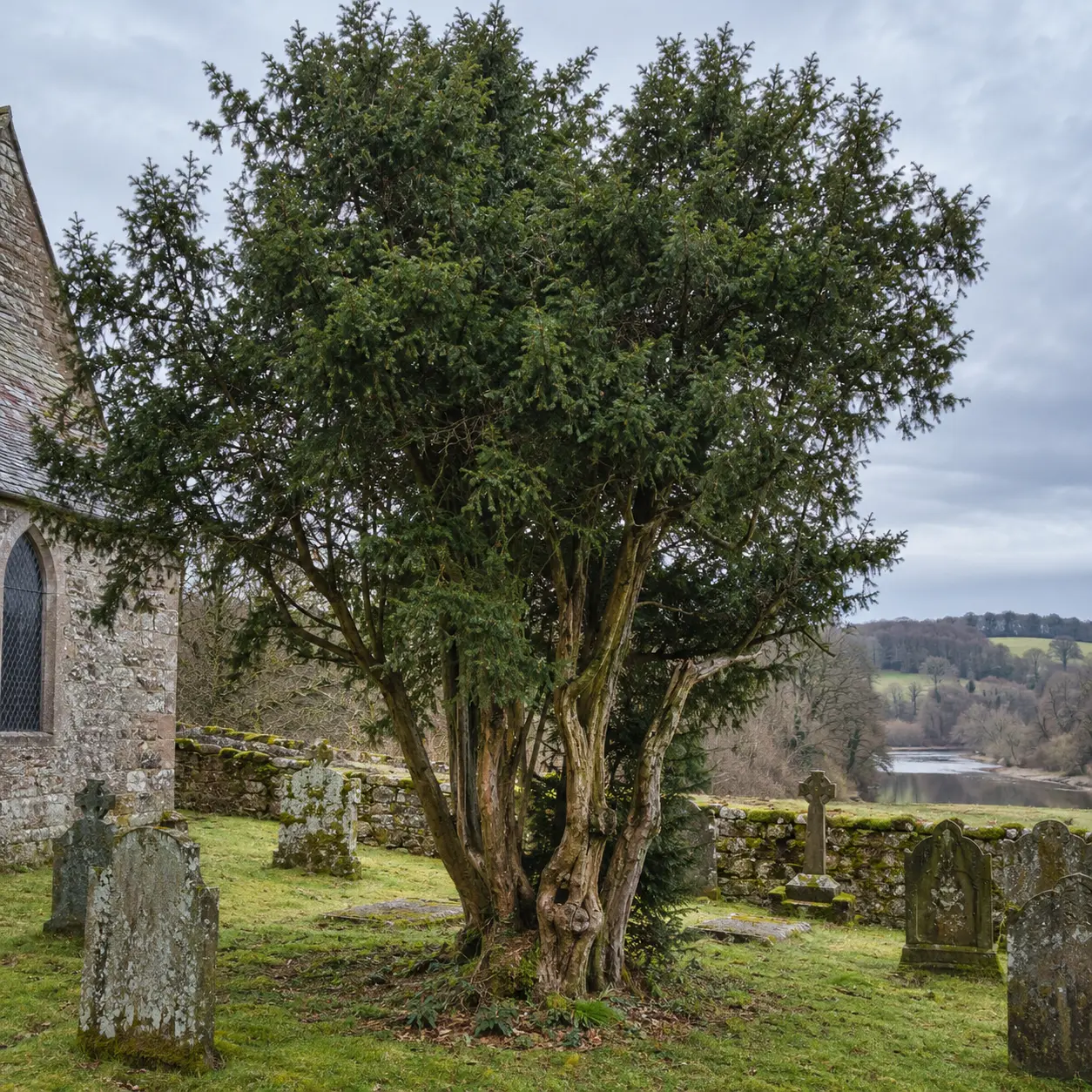
Begin by looking at the yew’s setting — the churchyard, wall, path and wider landscape that give it context.
Route visual
Sacred landscapes · Minto, Dryburgh and yew groves
Sacred landscapes
Yew trees carry stories across centuries. This is a quieter tour through ancient landscapes and the traditions held within them.
Small private groups; typically up to four guests
Starting area: Agreed around the selected churchyards and yew trees, often in the central Borders.
Private guiding with Mark · Vehicle travel between agreed sites · Route planning around your interests
Admission fees and food are extra unless agreed otherwise. Mark will confirm the total for your party before you book.
Planning your visit from overseasThe shape of the day
An ancient yew is a living object with a long memory. It may stand beside a church, a boundary or a burial ground, carrying layers of belief and community history that do not fit neatly into one period.
This tour takes a reflective route through those layers. Mark will explore what can be said with confidence, where tradition and evidence meet, and why these trees continue to hold attention long after the first visit.
The yews provide a slower way into Border history. Their surroundings, survival and stories invite attention to the relationship between nature, belief and the communities that have cared for these places.
Find your bearings
These tours explore southern Scotland and the wider border country with England. Tell Mark where you are staying and whether you will have a car, so the meeting point and route can be discussed before you make travel arrangements.
Day tours usually last five to eight hours. Allow for the journey to and from the agreed starting point; collection from your accommodation is something to discuss, rather than assume.
Some stops involve uneven ground or slopes. Mention walking limits when enquiring so Mark can explain what is practical for your party.
Read the travel and booking questionsAt a glance
This tour involves road travel between selected sites and time on foot in churchyards or other historic settings. The notes below explain the likely surfaces, pace and access considerations.
Walking level
Gentle to moderate; churchyards and paths can still include uneven ground, steps or soft surfaces.
Vehicle time
Several road journeys link selected churchyards and yew trees; the route is kept at a reflective, unhurried pace.
Starting area
Agreed around the selected churchyards and yew trees, often in the central Borders.
Typical group size
Small private groups; typically up to four guests
Payment
Bank transfer after the route and plans are agreed; details are supplied with the confirmation.
A good fit for
Choose this day if you are interested in ancient trees, sacred places, local tradition or the quieter details of the Scottish landscape. It rewards people who like to observe before rushing to conclusions.
More than a stop on a map
The Scottish yew is not a giant ornamental tree with a single enormous trunk. In the Borders, ancient yews are often modest, multi-stemmed trees whose age is suggested by their setting, growth and long relationship with the churchyard or burial ground around them. Minto and Dryburgh offer a way to explore that relationship in place.
The tour brings together botany, local tradition, Christian practice and the folklore attached to long-lived trees. Mark will keep a clear line between what can be established and what belongs to later belief, while allowing time to appreciate why yews continue to feel significant in the Scottish landscape.
Questions you can bring
Inside the itinerary
Look first at the tree’s setting, then at the beliefs attached to it and finally at the evidence that helps us understand why these living landmarks have endured.
Begin by looking at the yew’s setting — the churchyard, wall, path and wider landscape that give it context.
Explore the traditions attached to ancient yews while keeping a clear distinction between story, symbolism and what can be established.
Leave time for quiet observation and conversation about why certain places continue to feel sacred or significant.
Good to know
A personal route
Keep exploring
A guest’s experience of touring with Mark
“We were treated to a wide variety of delightful adventures. I would highly recommend this tour to anyone looking for a gentle, yet deep introduction to these special lands.”
Ellen · California
Read guest feedbackGet to know the stories through Mark’s heritage archive, then bring your questions on the day.
Ask Mark about this tour